
What is Ayers Rock (Uluru)? An explanation of its World Heritage designation and tourism.

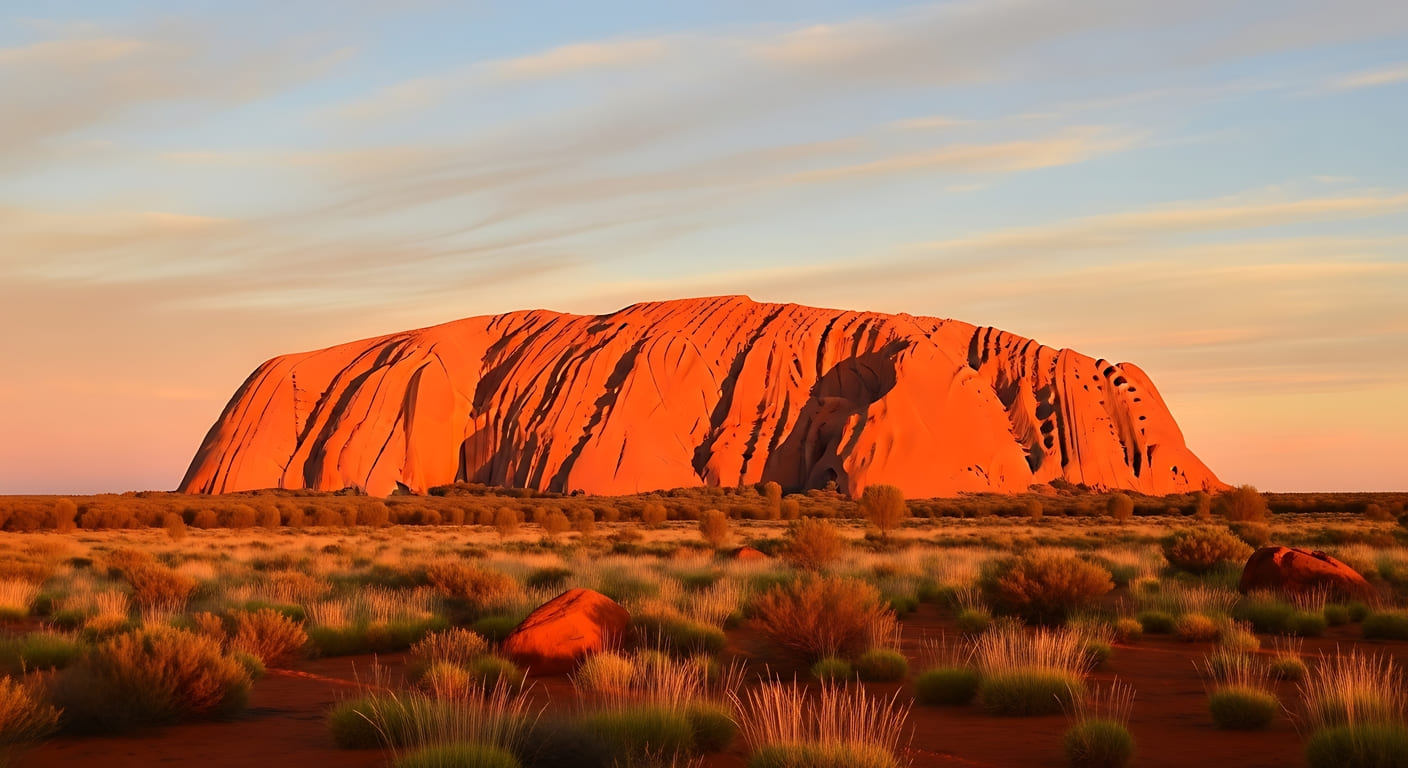
Uluru-Kata Tjuta National ParkIt spreads across the red plains of central Australia.Mixed HeritageIt is a massive monolith known by the common name "Ayers Rock."UluruAnd 36 dome-shaped rock formationsKata TjutaIt encompasses various features and was designated a World Natural Heritage Site in 1987, and expanded to a Mixed Heritage Site in 1994 with the addition of cultural criteria. This article summarizes the reasons for its World Heritage designation, the culture of the indigenous Aboriginal people, and its attractions and access.
What is Uluru-Kata Tjuta National Park?
Uluru-Kata Tjuta National Park isAustraliaThis national park is located in the Northern Territory, almost in the center of the continent. It covers an area of approximately 1,326 km².
The symbol of the parkUluruIt is a single slab of sandstone approximately 348m high and 9.4km in circumference, and it is believed that only a small portion of it is exposed above ground. Approximately 30km to the west,Kata TjutaThe area is home to 36 rounded rock domes, collectively known as Olga (the highest peak at approximately 546m). Each dome rises impressively from the flat, red desert landscape.
"Ayers Rock" is a name given in 1873 by the British explorer William Goss. In the language of the indigenous Anangu people, it has been known since ancient times.UluruIt is called [name of the park], and this is currently the official name. The park is owned by the Anangu people and the Australian Federal Government.joint managementUnder these conditions, both the natural environment and indigenous cultures are preserved.
Reasons for being registered as a World Heritage Site
Uluru-Kata Tjuta National Park was initially registered as a natural heritage site in 1987. Later, in 1994, cultural criteria were added, recognizing its value as both a natural and cultural site.Mixed HeritageThis is how it works. UNESCO evaluates based on the following four criteria:
- Criteria (v)The Anangu people's traditional hunting, gathering, and other practices are outstanding examples of how they foster a close relationship between people and their environment.
- Criteria (vi): A cultural landscape based on Tjukurpa, possessing a living belief system in which the existence of ancestors and acts of creation are inscribed on rocks and landforms.
- Criteria (vii)The colossal monolith of Uluru and the domes of Kata Tjuta form a magnificent and unparalleled landscape that juts out from the flat desert.
- Criterion (viii)Inselberg (an isolated hill with a steep slope) is an outstanding example of crustal movement, geochemical, and geomorphological processes.
The most distinctive feature of this heritage site is the recognition that its breathtaking natural scenery and the living culture of its indigenous people are inseparable. Mixed heritage sites are limited in number among World Heritage Sites, and this site can be said to symbolize the profound depth of Australia's nature and culture.
Aboriginal sacred sites and Chukulpa
Uluru and Kata Tjuta are indigenous Australians.Anangu peopleFor tens of thousands of yearssacred placeAt the core of their worldview is a system called **Tjukurpa**, which is also translated as "Dreamtime" in Japanese. Tjukurpa is not merely a myth, but a living system of knowledge that encompasses law, morality, and the relationship with the land.
According to UNESCO, in the story of Chukulpa, the ancestral hero **MalaorIt is believed that Lungkata and others traveled through this land and created the rocks, caves, and water sources of Uluru and Kata Tjuta. The rock paintings and depressions remaining at the foot of Uluru are still carefully preserved as traces of these ancestral actions.
In October 2019Climbing Uluru is permanently prohibited.This decision, which the Anangu people have long sought, has garnered international attention as a demonstration of respect for their sacred site. Visitors are requested to be mindful of areas where photography is prohibited and to respect the Anangu people's cultural rules.
Highlights (Uluru, Kata Tjuta, Sunset)
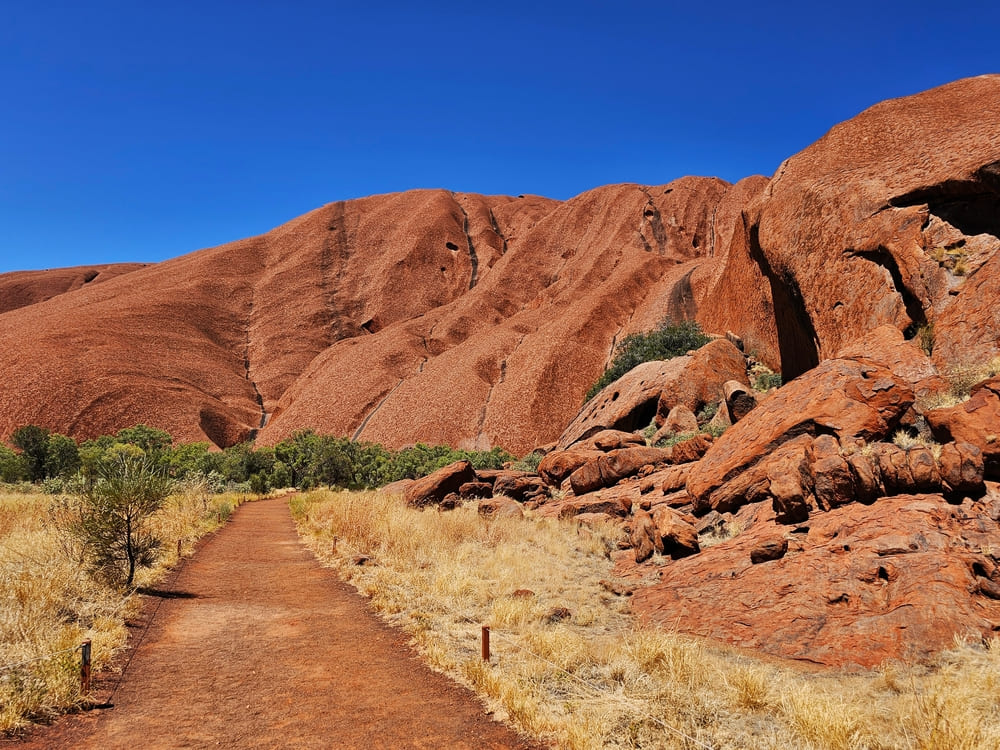
Uluru
A loop around the base of the mountainBasewalk(Approximately 10km, about 3.5 hours) Here you can see the cave paintings, the Mutitjul Waterhole, and the unique rock formations created by weathering up close. There is also a shorter course that can be partially walked, so you can choose according to your fitness level.
Kata Tjuta
Kata Tjuta, meaning "many heads," is the most popular attraction in the park.Valley of the Winds WalkThere is a trail that goes around in about 7.4 km and takes about 3-4 hours to complete, where you can experience the geological scale of the Earth as you walk through a group of giant domes. There is also a more accessible Walpa Canyon Walk (about 2.6 km, about 1 hour).
Sunrise and sunset
Uluru's colors change dramatically depending on the time of day and weather.SunsetDuring this time of day, the sight of the sky changing from red to orange to purple in a gradient is breathtaking. The park has a dedicated observation area for sunsets and sunrises, which attracts many tourists. The sunrise view from Kata Tjuta is also highly recommended.
Access and basic information
The nearest airport to Uluru-Kata Tjuta National Park is **Ayers Rock Airport (Connellan Airport)**. Direct flights are available from major cities such as Sydney and Cairns, and the park entrance is approximately a 20-minute drive from the airport.
Ayers Rock Resort (Yulara), the base for sightseeing, has hotels, campgrounds, restaurants, and supermarkets. The park entrance fee is A$38 per adult (valid for 3 days, as of 2025). There are also a variety of local tours available, including guided walks, camel tours, and helicopter tours.
During the summer months (November to March), temperatures can exceed 40°C, so hydration and sun protection are essential. Autumn and winter (April to September) are considered the best seasons, as they are relatively more comfortable.
DetailsUNESCO World Heritage CentreandParks Australia Official WebsitePlease refer to the following.
As another World Heritage Site in Australia,Sydney Opera HousePlease also see the article below. For those interested in the scale of natural heritage sites,Galapagos IslandsWe also recommend this article.
summary
Uluru-Kata Tjuta National Park is a mixed heritage site where breathtaking natural landscapes and the living culture of the Anangu people are intertwined. Beyond simply enjoying the spectacular views of Ayers Rock, exploring the worldview of the Chukulpa people and the reasons behind the ban on climbing will make your trip a much deeper experience.

YouTubeI've also released a vlog I made when I actually went to Uluru in 2026! Please enjoy the real atmosphere, including how to get there from Sydney, the activities I did there, and the base walk around the rock.