
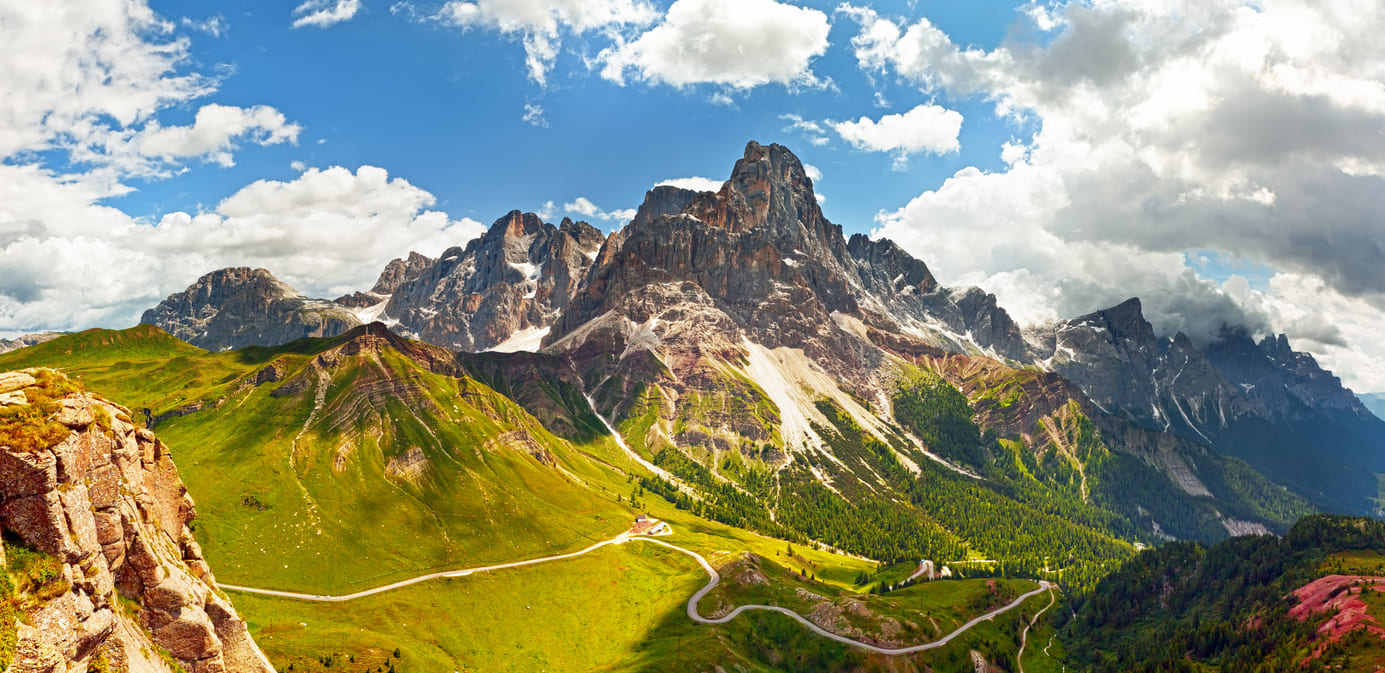
The Dolomites (hereinafter referred to as the Dolomites), which stretches across the northern Italian Alps, is a series of peaks over 3,000 meters above sea level.A magnificent mountain landscape with vertical cliffs and deep, narrow valleysIt is known for its overwhelming natural beauty, but it is also highly regarded as a World Heritage Site for the fact that it conveys the Earth's long history in its original form, with ongoing changes in the topography and overlapping rock formations originating from ancient oceans.
What are the Dolomites?
The Dolomites is a large mountain range that stretches across the Alps in Northern Italy. The official World Heritage site document emphasizes the extremely diverse and dense limestone formations, including peaks, towers, spires, pinnacles, and vertical cliffs.The series of sheer walls and deep valley cuts give the landscape a sense of "verticality" and "tension."This is at the heart of the natural beauty of the Dolomites.
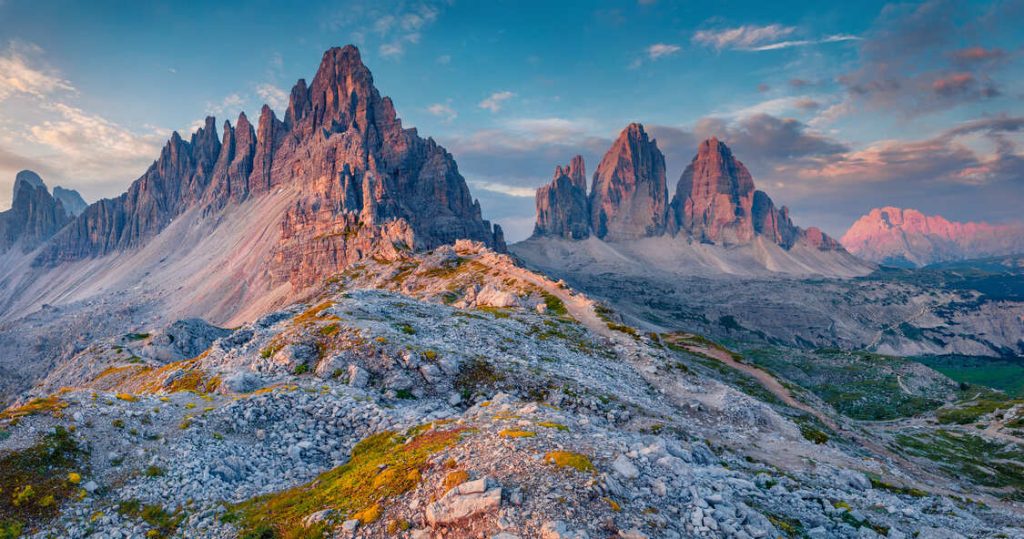
It is also important to note that the landscape changes dramatically depending on the light throughout the day. The rock walls show intense colors in the morning and evening, with shades ranging from orange to reddish purple. They are said to take on a unique brightness even in twilight or moonlight.The time of day you view it is itself part of the landscapeIt has become.
reference:"The Dolomites” (UNESCO World Heritage Center)
How was this stunning landscape created?
The Dolomite landscape is not a product of chance; it has a global timeline behind it.
Many of the rock bodies that appear today as steep rock peaks areMesozoic, especially Triassic carbonate platformsOfficial documents state that this is a rare area where a huge carbonate platform and the surrounding ocean basin can be observed as a "natural cross section (transect)." Furthermore, rocks from the upper Paleozoic to Mesozoic eras can be seen almost continuously,Earth's history spanning approximately 200 million years can be deciphered from a small areaThis is the basis of its geological value.
Later, uplift and erosion continued, and glacial and water action carved deep valleys. Karst topography can also be seen, and the action of water underground and on the surface has created complex topography.
These processes are not just a thing of the past, but are ongoing. The Dolomites are prone to landslides, floods, avalanches, and other natural disasters.Mountains with frequent dynamic terrain changesThe essence of this region is that it is not a static landscape, but one that embraces change.
reference:"Nomination file 1237rev (inscribed)” (UNESCO World Heritage Center)
Rocks that preserve the Earth's memories
The Dolomites areA well-preserved example of a Mesozoic carbonate platformThe rocks contain a fossil record, providing clues to understanding the ancient ocean environment. Official documents indicate that the area is a key reference area for Triassic research, and that rocks from the Upper Paleozoic to Mesozoic eras can be observed in succession.
What's important is that the beautiful scenery and geological value are inseparable. The impressive vertical rock walls are the result of a combination of the carbonate platform material and the long-term processes of uplift and erosion. The natural beauty of the Dolomites is also a vestige of the Earth's history.
 English
  日本語
日本語