
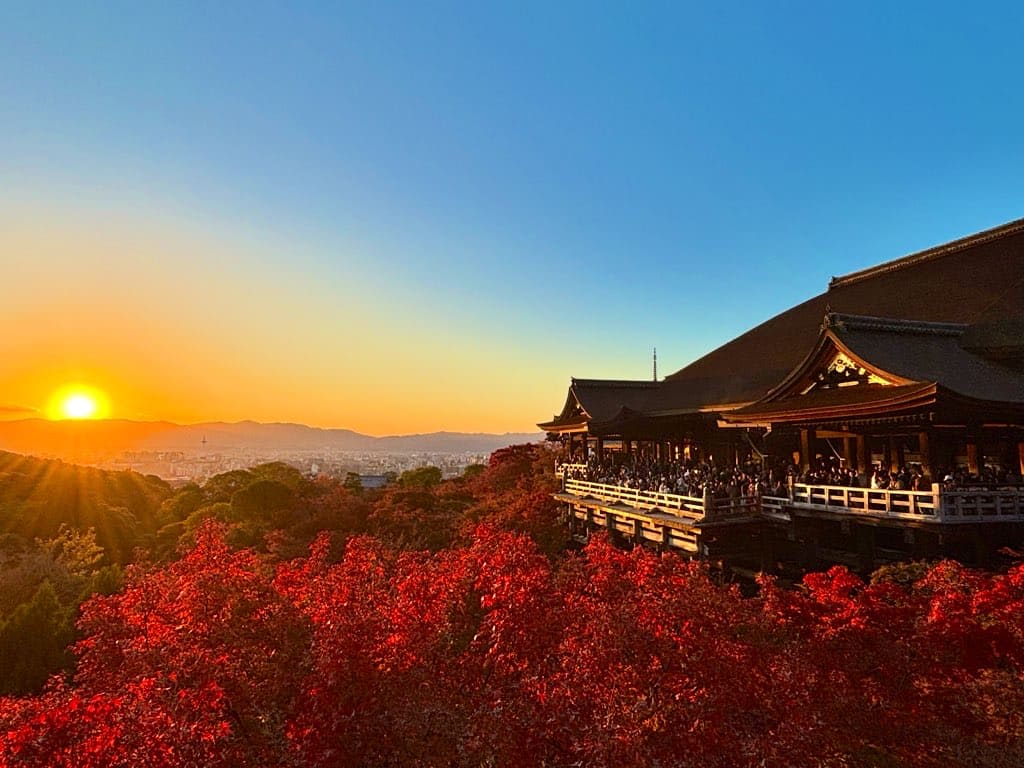
The temples, shrines, and castles scattered throughout Kyoto were designated a UNESCO World Cultural Heritage site in 1994."Historical Monuments of Ancient Kyoto"It was registered as such.
This article explains the reasons and criteria for registration.UNESCO World Heritage CentreBased on the evaluation criteria, we will organize the information and clearly summarize the positioning of the 17 constituent assets, as well as the highlights of representative examples such as Kiyomizu-dera Temple and Kinkaku-ji Temple.
Kyoto's World Heritage Sites
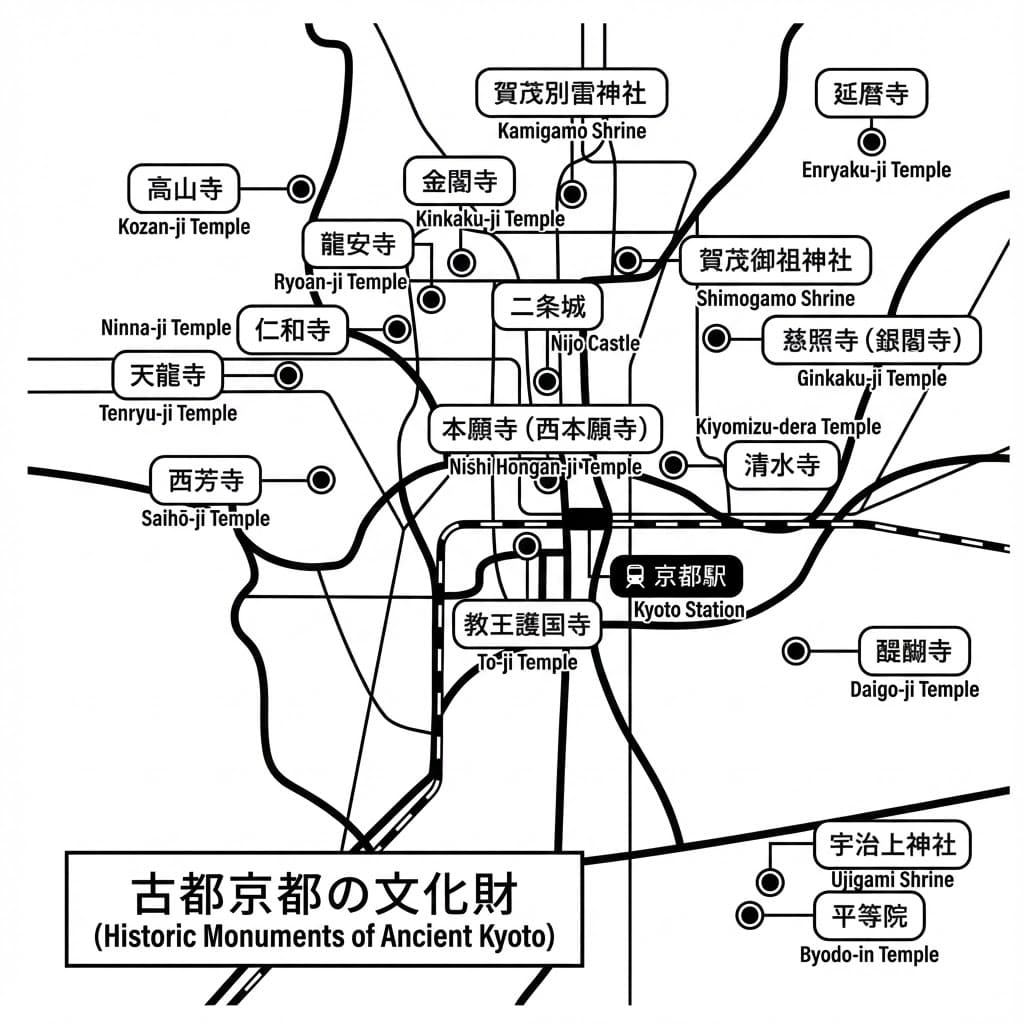
The "Historic Monuments of Ancient Kyoto" span Kyoto City, Uji City, and Otsu City in Shiga Prefecture.Temples, shrines, castlesThis is a serial heritage site consisting of a total of 17 buildings. Its core value lies in the fact that Kyoto, which developed as the political, religious, and cultural center of Japan for over a thousand years since the Heian period, retains layers upon layers of architecture, gardens, and religious forms from various eras. It goes beyond simply introducing individual landmarks,A cultural landscape where urban areas and religious sites are integrated.It is important to understand it in this way.
List of 17 constituent cultural properties of the ancient capital of Kyoto
The following 17 properties are registered as cultural properties of the ancient capital of Kyoto.
| Asset Name | Asset Address | Era of construction | overview |
|---|---|---|---|
| Kamigamo Shrine (Kamo Wakeikazuchi Shrine) | Kita Ward, Kyoto City | 7th century | One of the oldest shrines in Kyoto, it is characterized by its main building that retains the appearance of ancient rituals. |
| Shimogamo Shrine (Kamo Mioya Shrine) | Sakyo Ward, Kyoto City | 6th-7th century | The area is attractive for its tranquil atmosphere, with the scenery of ancient rituals remaining, including Tadasu no Mori. |
| Kiyomizu-dera Temple | Higashiyama Ward, Kyoto City | Nara period | Known for its stage-style main hall, this temple developed as a center of Kannon worship. |
| Enryaku-ji Temple | Sakamoto, Otsu City | 8th century | This mountain temple has served as the head temple of the Tendai sect and the center of Japanese Buddhism. |
| Daigoji Temple | Fushimi Ward, Kyoto City | Heian period | This Shingon Buddhist temple is widely known for its lush buildings and cherry blossoms. |
| Ninna-ji Temple | Ukyo Ward, Kyoto City | Heian period | This is a monzeki temple famous for its Omuro cherry blossoms, and is characterized by its dignified layout of the temple buildings. |
| Byodoin Temple | Uji City | Heian period | The Phoenix Hall symbolizes the Pure Land, and the temple is famous for its elegant Amida Hall architecture. |
| Ujigami Shrine | Uji City | Heian period | This ancient shrine is one of the oldest surviving shrine buildings and is surrounded by a quiet forest. |
| Kosanji Temple | Ukyo Ward, Kyoto City | Kamakura period | This historic temple is known for its Choju Giga paintings and is home to Japan's oldest tea plantation. |
| Saihoji Temple (moss temple) | Nishikyo Ward, Kyoto City | Northern and Southern Courts period | This Zen temple is world-famous for its moss garden, and advance reservations are required to visit. |
| Tenryuji Temple | Ukyo Ward, Kyoto City | Muromachi period | It is famous for its garden that uses Arashiyama as a backdrop, and it has flourished as an important Rinzai sect temple. |
| Ryoanji Temple | Ukyo Ward, Kyoto City | Muromachi period | This Zen temple is internationally acclaimed for its iconic dry landscape garden stonework. |
| Kinkakuji Temple (Rokuonji Temple) | Kita Ward, Kyoto City | Muromachi period | It features a three-story reliquary hall covered in gold leaf and is a symbol of Kitayama culture. |
| Ginkakuji Temple (Jishoji Temple) | Sakyo Ward, Kyoto City | Muromachi period | The gardens and architecture embody the concept of wabi-sabi, a style characteristic of Higashiyama culture. |
| Toji Temple (Kyoogokokuji Temple) | Minami Ward, Kyoto City | Heian period | This Shingon Esoteric Buddhist temple, symbolized by its five-story pagoda, is an ancient temple associated with Kukai. |
| Nijo Castle | Nakagyo Ward, Kyoto City | Edo period | The Ninomaru Palace is famous for its sliding screen paintings, and the castle is a symbol of the authority of the Tokugawa shogunate. |
| Nishi Honganji Temple (Honganji Temple) | Shimogyo Ward, Kyoto City | Azuchi-Momoyama period | It is the head temple of the Jodo Shinshu sect and many buildings that embody Momoyama culture remain. |
Why the cultural assets of the ancient capital of Kyoto were registered as a World Heritage Site
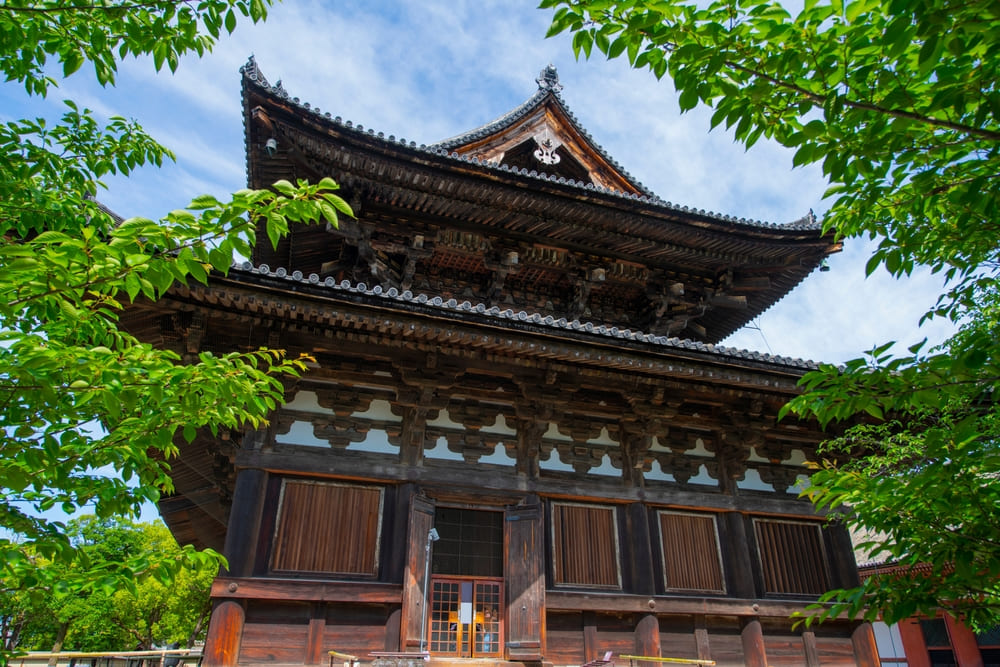
Reasons for UNESCO registrationThe main registration criteria are listed below:
- Criteria (ii)Kyoto has long been a center of cultural exchange in East Asia, accepting foreign religions, architecture, and ideas,It has matured as a unique Japanese culture.The fact that this was done is particularly noteworthy.
- Criterion (iv)From the Heian period to the Edo periodDevelopment of Japanese Architectural and Garden Stylesor religious facilities in harmony with natureCultural LandscapeThis should be an example that demonstrates this on a city-wide basis.
In addition to being "cities with many famous sights,"A systematic collection of evidence for interpreting cultural and architectural history.It has been evaluated as:
History and Background
Since the relocation of the capital to Heian-kyo in 794, Kyoto has long been a center of imperial and Buddhist culture. Even under the samurai government, the imperial court, temples and shrines interacted with the urban space, resulting in Zen Buddhist gardens, Pure Land Buddhist gardens, castles and samurai culture, and the head temples of urban believers in the early modern period.The values of each era are reflected in the architecture and landscape.This is why mountain temples like Enryaku-ji Temple on Mount Hiei and the political stage of the early modern period like Nijo Castle are registered under the same framework, in order to demonstrate their continuity.
During the Muromachi and Sengoku periods, the patronage of the shugo daimyo and sengoku daimyo became intertwined with Zen Buddhism, exemplified by the Golden Pavilion and the Silver Pavilion.Kitayama/Higashiyama cultureThe space was prepared. During the Edo period, temple towns developed, and pilgrimage and commerce formed the urban arteries. Even after the relocation of the capital functions in the modern era, religious facilities and traditional streetscapes remained."The city itself is a stage for cultural heritage."This viewpoint has also been emphasized in discussions regarding World Heritage registration.
Historical background and highlights of representative heritage sites
Here are some examples that can easily form the core of a visit plan:Key historical points and a guide to visiting the site.This is a summary. Please be sure to check the latest information on each temple's official website, as visiting hours, fees, and photography policies may change. Any other constituent properties not detailed here will be supplemented in the "Other Constituent Properties" section below.
Kiyomizu-dera Temple
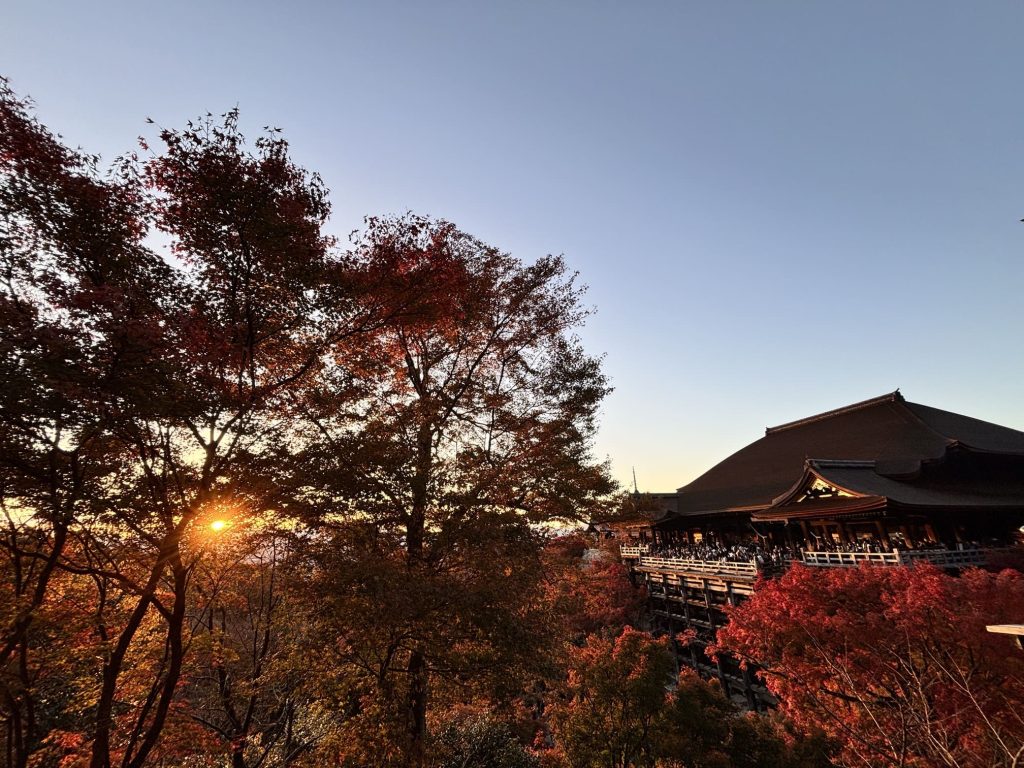
According to tradition, it was founded around 778, and as a sacred site for Kannon worship, it has attracted widespread support from commoners to nobles. The main hall is located on the cliff of Kiyomizu.The cantilevered structure, built in the kakezukuri style, itself tells a story of the connection between faith and the topography. Within the temple grounds is a three-story pagoda.orOtowa FallsIt is known as an experience where the changing seasons and the views of Kyoto city and the surrounding mountains come together. In the context of World Heritage sites, it is also positioned as an example of popular Buddhism from the medieval period onward and the landscape of temples and shrines in the suburbs of a city.
Kinkaku-ji (Rokuon-ji) and Ginkaku-ji (Jisho-ji)
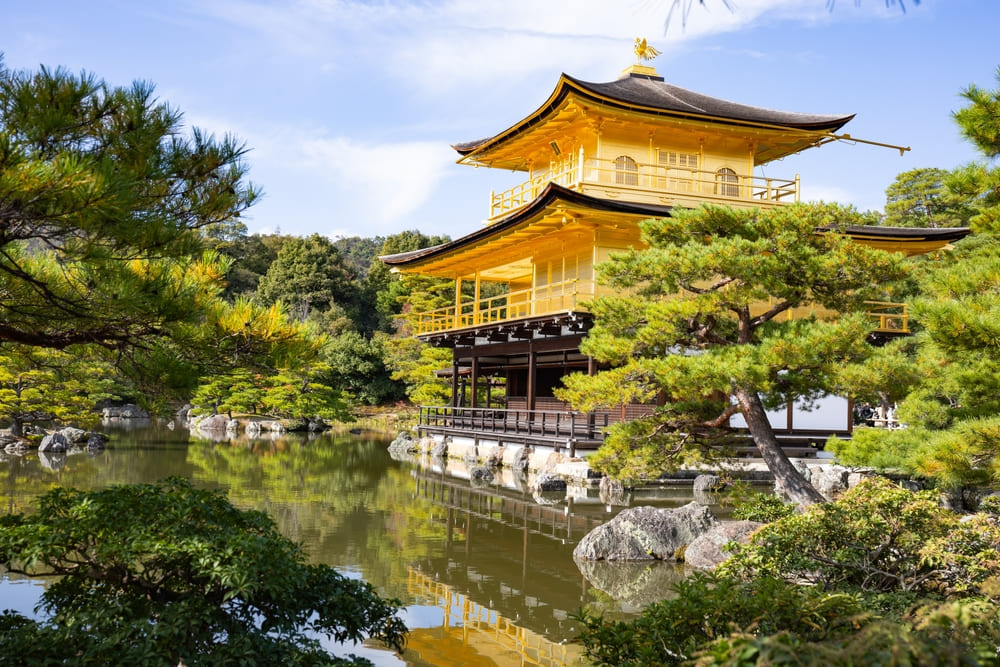
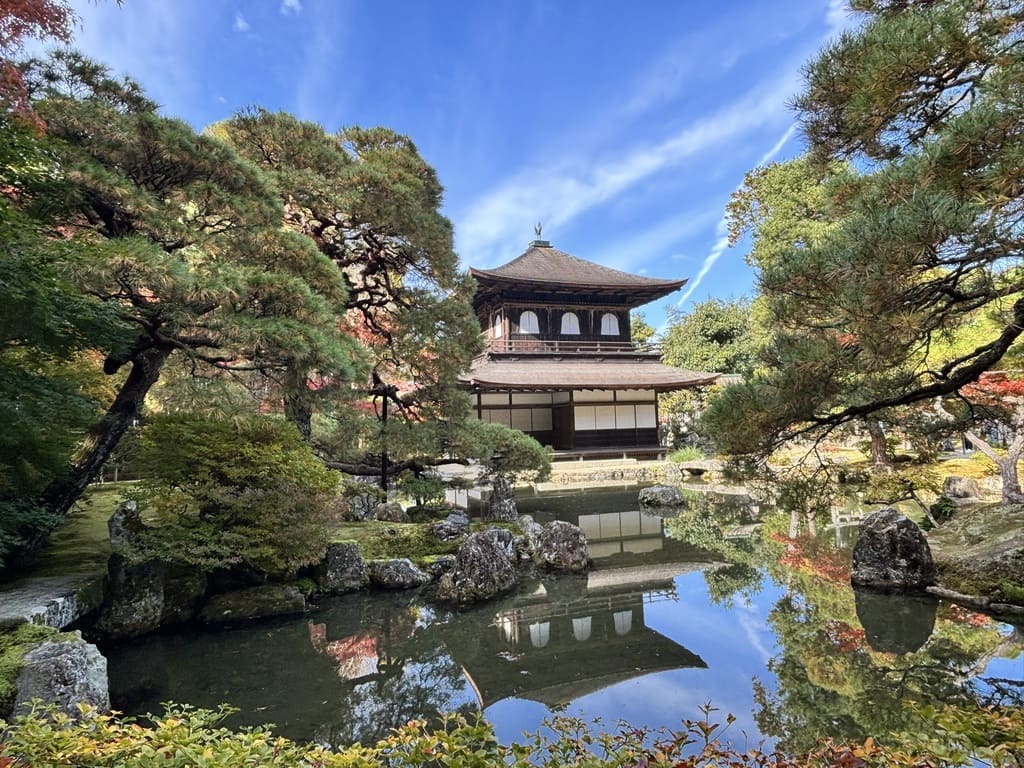
The Golden Pavilion (Shariden) was built by Ashikaga Yoshimitsu, the third shogun of the Muromachi shogunate.Kitayama-donoIt originated from the image of gold leaf reflected on the surface of the Mirror Lake.The splendor of Kitayama cultureIt is a symbol of the eighth shogun, Yoshimasa.Higashiyama-donoOriginating from that, and although silver leaf was not present from the beginning,The simplicity and profound beauty of Higashiyama cultureThe garden, centered around a dry landscape garden, harmonizes beautifully with the surrounding landscape. When you examine both temples together, it becomes easier to compare the different aesthetic sensibilities and expressions of power, even though they were both from the Muromachi period, providing a clue to understanding the multifaceted nature of Kyoto.
Nijo Castle
Construction began in 1603 under Tokugawa Ieyasu.Samurai bases in KyotoIt is also famous as the setting for the Meiji Restoration (1867).Ninomaru PalaceThe screen paintings and architectural style are of high historical value as evidence of the authority and court culture of the early modern period, and the stone arrangements and artificial hills of the garden are linked to the tradition of daimyo gardens. Considering the significance of the castle as a military facility within the urban structure of Kyoto, where the imperial court was located, the World Heritage site "Ancient Kyoto"Coexistence of the samurai class and the imperial courtThis theme becomes apparent.
Tenryu-ji Temple and Ryoan-ji Temple
Tenryu-ji Temple is known for its memorial service for Emperor Saga and for the involvement of Muso Soseki and others.Rinzai Zen sect head templein,Sogenchi GardenIt is highly regarded as a representative work that combines a pond-centered strolling garden with borrowed scenery.Known for the tranquility of its rock garden (dry landscape garden), the contrast between the arrangement of 15 stones and the white sand resonates with the international image of Zen Buddhist art. Both temples are indispensable for "reading garden history," and the Arashiyama area can be explored in half a day to a full day.It often forms the core of a route you take.
Byodo-in Temple and Ujigami Shrine
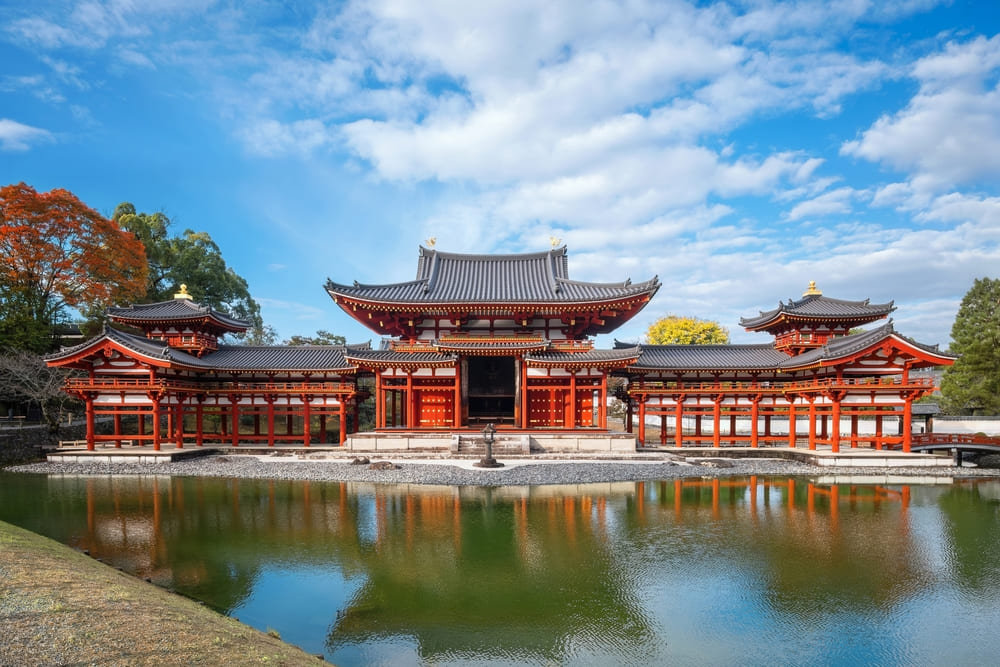
Byodo-inPhoenix HallIt stands out as an outstanding example of Heian period Amida Hall architecture and the architectural manifestation of the Pure Land Buddhist worldview. Its reflection in the Aji Pond and the phoenix statue on the roof symbolize the aristocratic culture and Buddhist art of the time. The adjacent Ujigami Shrine has a main hall.Early Heian periodAs an important example of the architectural style of Shinto shrines, it was registered as a World Heritage Site.Continuity in Architectural HistoryIt reinforces this. Uji is outside of Kyoto City, but within the same group of heritage sites.One-day sightseeing tourThis distance makes it easy to incorporate into other projects.
Enryaku-ji Temple (Mount Hiei)
Founded by Saichō in 805.The head temple of the Tendai sectTherefore, it has long influenced the doctrines, rituals, and education of Japanese Buddhism. Its layout as a mountain temple and its cultural ties with the Kyoto and Lake Biwa region set it apart from temples and shrines on the plains.Scale landscapeIt forms a network.The journey takes a long time.Because this tends to happen, it's reasonable to plan to include it on a different day from the other constituent assets.
Other component assets (overview)
In addition to the above, the following assets are also included as World Heritage Sites:Diversity of religions and architectural stylesThis will show you.
- Kamo Wakeikazuchi Shrine (Kamigamo) and Kamo Mioya Shrine (Shimogamo)These are all ancient shrines that have been deeply involved in both court rituals and folk beliefs, such as Tadasu no Mori (Shimogamo).Shrine groveIt is also valuable as a natural landscape within an urban area.
- Kyo-o-gokoku-ji Temple (Toji Temple): One of the fundamental training grounds of the Shingon sect,Five-storied pagodaThis is an iconic landscape of Kyoto.
- Daigo-ji Temple, Ninna-ji Temple, Kozan-ji Temple, Saiho-ji Temple (Moss Temple)The Buddhist architecture, gardens, and sutra copying culture of the Heian and Kamakura periods each embody the spirit of their respective eras. Saihoji Temple requires advance reservations.The conditions for entering the mountain and visiting the temple are unique.Therefore, careful planning is necessary.
- Honganji Temple (Nishi Honganji Temple)It is one of the head temples of the Jodo Shinshu sect and a large urban temple.Early modern urban lay cultureThis will show you.
These are not "points of interest," but rather things that UNESCO has pointed out.Evidence for criteria (ii) and (iv)Viewing it this way makes it easier to understand why the 17 items constitute a single serial heritage.
Tips for strolling and exploring
- Area unitCombining these locations will reduce the burden (for example, Higashiyama to Kiyomizu-dera area, Kitayama to Kinkaku-ji, Arashiyama to Tenryu-ji/Ryoan-ji, Uji, and Mount Hiei are recommended to be visited on separate days).
- The route from Kiyomizu-dera Temple to Gion and Yasaka has many slopes and stairs on some days,Walking distance and shoe selectionIt's reassuring to have an estimate in advance. Arashiyama tends to be crowded with tourists.Early morning / WeekdaysIt's worth considering using it.
- Saihoji Temple (Moss Temple)Pre-registrationThis may be necessary. Please be sure to check the official instructions.
- If you plan to visit this site in conjunction with other World Heritage sites in Japan,Himeji Castle,Shrines and temples of Nikko,Itsukushima ShrinePlease also refer to articles such as the ones mentioned above.
The video makes it easier to grasp the actual walking distance, the atmosphere of the temple grounds, and the way multiple spots are connected. The text explains the history and reasons for registration, while the video...Information that is close to bodily sensationsUsing them interchangeably, with the understanding that they complement each other, will deepen your understanding before your trip.
summary
The cultural properties of the ancient capital Kyoto areEach of the 17 sites possesses its own individual value, yet they are interconnected as a cultural landscape within the context of Kyoto, Uji, and Hiei.These points are the key to a World Heritage site. Using criteria (ii) and (iv) pointed out by UNESCO as a guide, we can gain a perspective that goes beyond simply viewing it as a "list of tourist destinations." When visiting representative temples and shrines,Why did that architecture and garden come into existence in that era?Being mindful of these details will significantly enhance your satisfaction with your visit. Before your visit, it's a good idea to check the opening hours and viewing procedures using primary sources from the Agency for Cultural Affairs and each managing organization, and plan accordingly.
 English
  日本語
日本語
YouTubeI've also released a VLOG from 2025 when I actually visited the cultural properties of the ancient capital of Kyoto! Please use it as a reference to see the atmosphere of the temples and shrines that make up the complex, the flow of walking around Kyoto city, and the connections between the points of interest.