
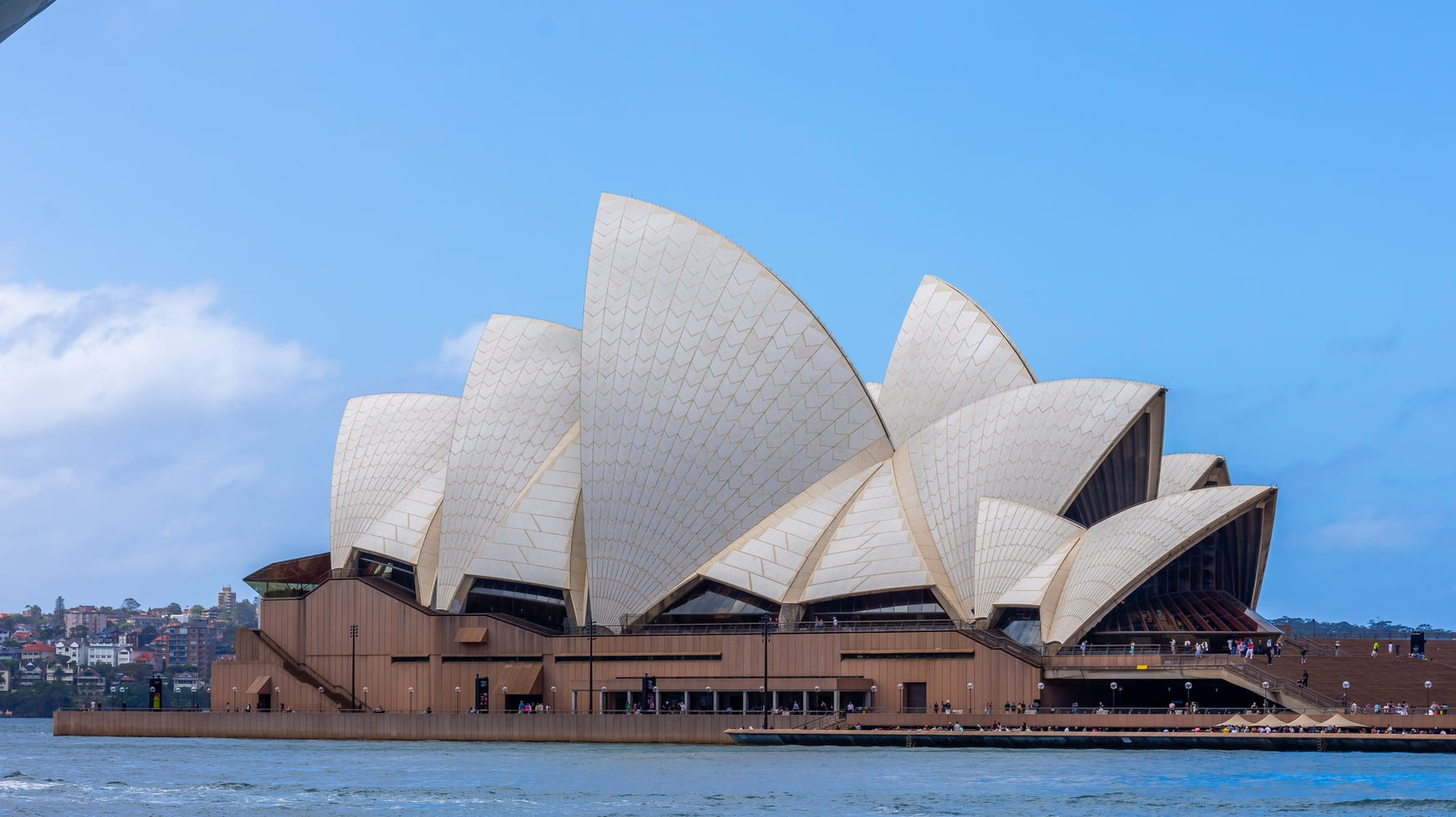
A symbol of Sydney, AustraliaSydney Opera HouseIn 2007World Cultural HeritageThis is a representative architectural masterpiece of the 20th century, registered as a World Heritage Site. This article summarizes what the opera house is, the reasons for its World Heritage designation, the history of the challenges faced by its designer, Jörn Utzon, and highlights and access information.
What is the Sydney Opera House?
The Sydney Opera House is located in Sydney, New South Wales, Australia.Bennelong PointIt is a comprehensive arts complex located in Sydney. More than 1,500 performances are held there annually, including opera, ballet, concerts, and plays, and together with the Sydney Harbour Bridge, it forms one of Australia's most iconic landmarks.
basic information
| item | Contents |
|---|---|
| Official name | Sydney Opera House |
| location | Bennelong Point, Sydney, Australia |
| Designer | Jørn Utzon (Denmark) |
| Completed construction | 1973 |
| Year of World Heritage designation | 2007 |
| Registration Criteria | (i) |
3 sets of connectingshell structureIts white roof (composed of thin, curved surfaces) stands out against the harbor like a sail unfurled, making it one of the most recognizable buildings in the world.
Reasons for being registered as a World Heritage Site
UNESCO registered the Sydney Opera House as a World Heritage Site based solely on criterion (i).UNESCO's evaluationThen, it is stated as follows:
- Criterion (i)It is a great architectural work of the 20th century, a masterpiece that brings together multiple creative currents in both architectural form and structural design. It is a globally renowned and iconic building, a "city sculpture" set in a beautiful waterside landscape.
According to UNESCO, the use of innovative structural techniques in its construction and its lasting impact on the architectural world were also key factors in its evaluation. Inscription based solely on criterion (i) means that its artistic value as a purely architectural work was recognized, and its inscription in 2007 was an extremely early recognition for a 20th-century building.
The History of Architecture (Jørn Utzon's Challenge)
International competition and selection
In 1956, the New South Wales government held a design competition for the opera house. More than 200 entries were received from around the world, and in 1957, a Danish architect won the competition.Jörn UtzonJørn Utzon's design was selected. Utzon, then 38 years old, created a bold design resembling overlapping seashells that made a strong impression on the judges.
Construction was extremely difficult
However, realizing Utzon's design required unprecedented structural technology. The construction of the shell roof, in particular, proved difficult, and the project significantly exceeded the initially planned four years. The budget also ballooned to approximately 14 times the initial estimate. In 1966, Utzon left the project due to a conflict with the state government and departed Australia. His return to Denmark without seeing the building's completion remains an iconic episode in architectural history.
Completion and Re-evaluation
After Utzon's departure, a team of Australian architects took over, and the opening ceremony was held in 1973 by Queen Elizabeth II. The completed Opera House transcended criticism and became an icon of Sydney, and in 2003 Utzon received the Pritzker Prize (an international award often called the Nobel Prize of architecture). Its designation as a UNESCO World Heritage Site in 2007 was a rare example of a work by a living designer being recognized.
Highlights (architecture, performances, harbor views)
The architectural beauty of shell roofs
The main attraction is the three connectedShell-structured roofThe white roof, covered with over a million Swedish tiles, changes its appearance depending on the angle of the light. Not only is it beautiful from the outside,Guided tour inside the buildingBy participating, you can get a close look at the structure inside the roof and the interior of the hall.
Watch the performance
The venue features several halls, including the Joan Sutherland Theatre, and hosts a diverse program of opera, ballet, symphonies, plays, and contemporary music. For performance schedules and reservations, please see below.Opera House Official WebsiteYou can check it out there. The charm of the opera house deepens even more when you not only appreciate the architecture but also experience an actual performance.
View of Sydney Harbour
The Opera House is built in a way that it juts out into Sydney Harbour.Harbor BridgeThis location, featuring the same scenery as the city, is one of Sydney's most iconic photo spots. Don't miss the views from Milsons Point on the opposite shore or from the ferry, as well as the nighttime illuminations.
Access and basic information
It is easily accessible from central Sydney.
- trainSydney TrainsCircular Quay StationGet off the bus and walk for about 10 minutes.
- ferryIt's also within walking distance of the Circular Quay ferry terminal.
- busBuses to Circular Quay operate from various locations within the city.
For information on guided tours and performance ticket prices and schedules, please see below.Opera House Official WebsitePlease check the latest information there.
If you're planning a trip to Australia's World Heritage Sites, consider those that are highly regarded for their indigenous sacred sites and magnificent natural landscapes.Uluru-Kata Tjuta National ParkPlease also see the article. Furthermore, for those interested in 20th-century architectural World Heritage sites, see the registered site designed by Le Corbusier.National Museum of Western ArtWe also recommend this article.
summary
The Sydney Opera House, a masterpiece of 20th-century architecture, was recognized as a World Heritage Site based solely on registration criterion (i). Visiting it with an understanding of the challenges and hardships faced by its architect, Thomas Utzon, makes each of its white shell roofs even more impressive. Experience the architecture and art in conjunction with the view of Sydney Harbour.
 English
  日本語
日本語