
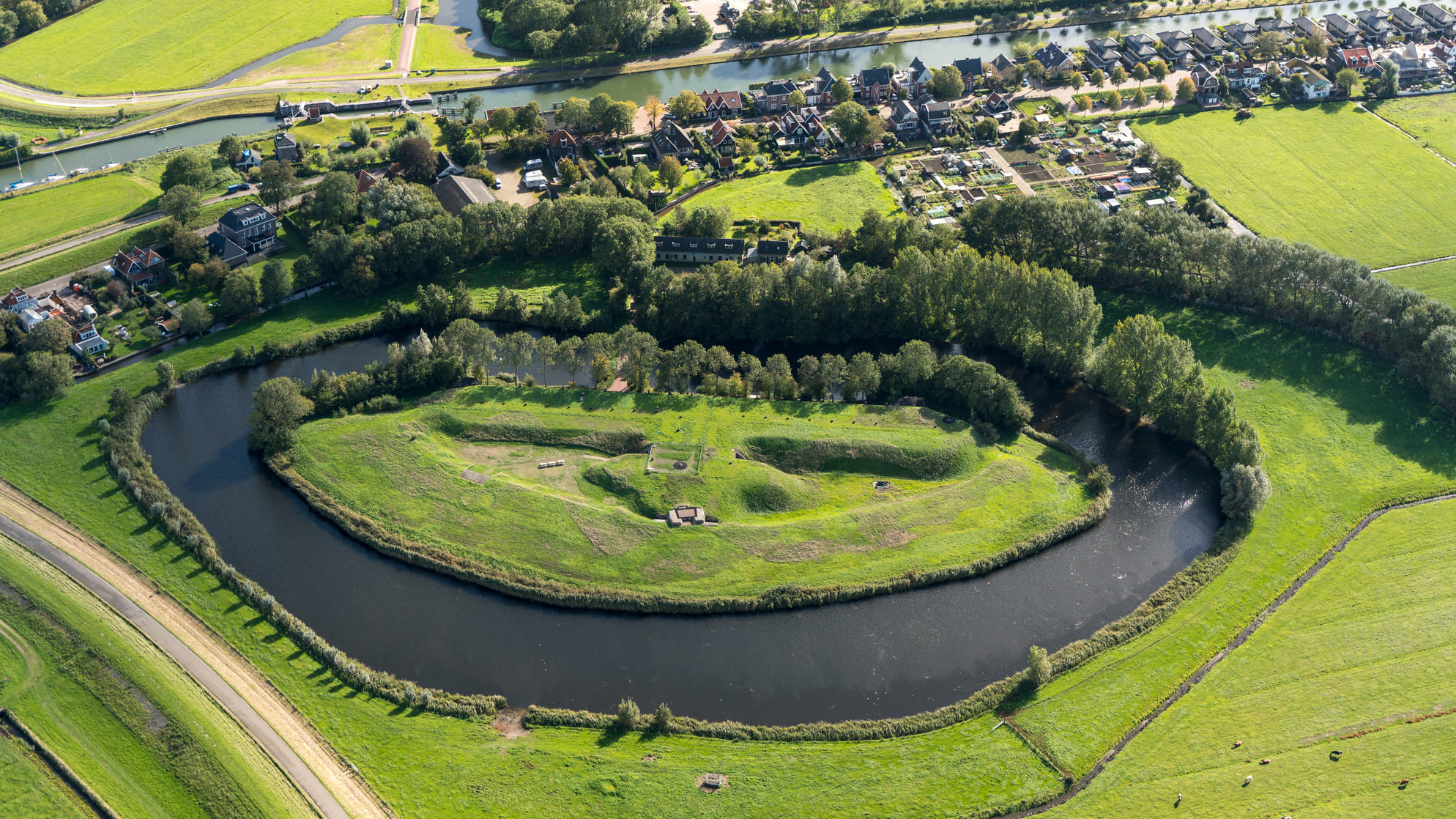
Amsterdam's defensive lineThis is a unique water-based defense system used to protect the Dutch capital, established in 1996.World Cultural HeritageIt was registered as a World Heritage Site. Currently, it forms a single heritage site together with the New Netherlands Water Defense as part of the "Dutch Water Defense Line." This article summarizes what the Amsterdam Water Defense Line is, the reasons for its World Heritage designation, its highlights, and how to access it.
What is Amsterdam's line of defense?
The Amsterdam Defense Line isNorth Holland, NetherlandsBuilt to protect the capital city of Amsterdam, it was primarily constructed around this area.Water-based defense facilitiesIt was developed between 1815 and around 1940, and consisted of approximately 45 forts, along with dikes, sluice gates, pumping stations, canals, and flood polders, all working together to prevent enemy incursions.Temporarily flood the landIt was designed with this idea in mind.
In the Netherlands, since the 16th century, wisdom has been accumulated in applying water management technology to defense. The system is extremely well-calculated, such as adjusting the water depth to a height that is "impossible to cross on foot and impossible to navigate by boat."
Reasons for being registered as a World Heritage Site
UNESCO values the Dutch water defense line (including the Amsterdam line) as follows:
- Criterion (ii)It illustrates the trajectory of European defense history as an example of a large-scale integrated defense system that emerged in the early 19th century.
- Criterion (iv): Taking advantage of the country's topographyMilitary defense by floodingIt is an outstanding example of military architecture, with well-preserved fortifications and surrounding landscape, and demonstrates the development of military architecture from 1815 to 1940 (from brick to reinforced concrete).
- Criteria (v)This is noteworthy as an example of how Dutch landscape design and hydraulic engineering expertise were incorporated into the defense of the country, including its capital.
The concept of "protecting the country with water," along with the landscape that integrates fortifications, sluice gates, and canals, led to its recognition as a World Heritage Site.
The history and structure of defensive lines
The defensive line was designed to prevent enemy incursions by flooding the polders (reclaimed land) with water, turning the lowlands into shallow lakes. Forts were strategic points protecting these "boundaries," and the water level was controlled by sluice gates and pumps. Amsterdam's defensive line was arranged in a circular pattern, encircling the city center.
After World War II, military use ended, and the forts were officially decommissioned in 1963. Today, many of the forts are used as museums, restaurants, and other facilities, and are popular spots for strolling and cycling.
Highlights (fortress, sluice gate, museum)
- Muiderslot CastleThis medieval castle is located near the eastern end of the defensive line. It is open to the public as a museum, and visitors can tour the gardens and the interior of the castle.
- fortsSeveral fortresses, including Fort Benderham and Fort Naarden, are open for tours and events. Some fortresses have cafes and exhibits, and you can see the transition from brick to concrete construction.
- Water gate/canalAlong the defensive line, floodgates and canals remain, offering scenic views from cycling and hiking routes.
It's a good idea to check the opening days and hours of each facility beforehand to ensure a smooth visit.
Access and basic information
From Amsterdam Central StationMuydenIt takes about 15 minutes by train to get there, and Muiden Castle can be accessed by bus or on foot from the station. Other fortresses are typically visited by car or bicycle from Amsterdam, Haarlem, or Utrecht. Please check the official websites for the latest information on admission fees and opening days for each fortress and museum.
DetailsUNESCO World Heritage CentrePlease also refer to the information from the Netherlands Board of Tourism & Conventions.
summary
Amsterdam's defensive line is a World Heritage Site unique to the Netherlands, a country that defended itself with water. The integrated structure of fortifications, sluice gates, and landscapes is highly valuable from both a military history and water management technology perspective, and can now be easily experienced through walks and museum visits. When you visit Amsterdam, try combining it with a visit to Muiden Castle or other nearby fortifications.
 English
  日本語
日本語