
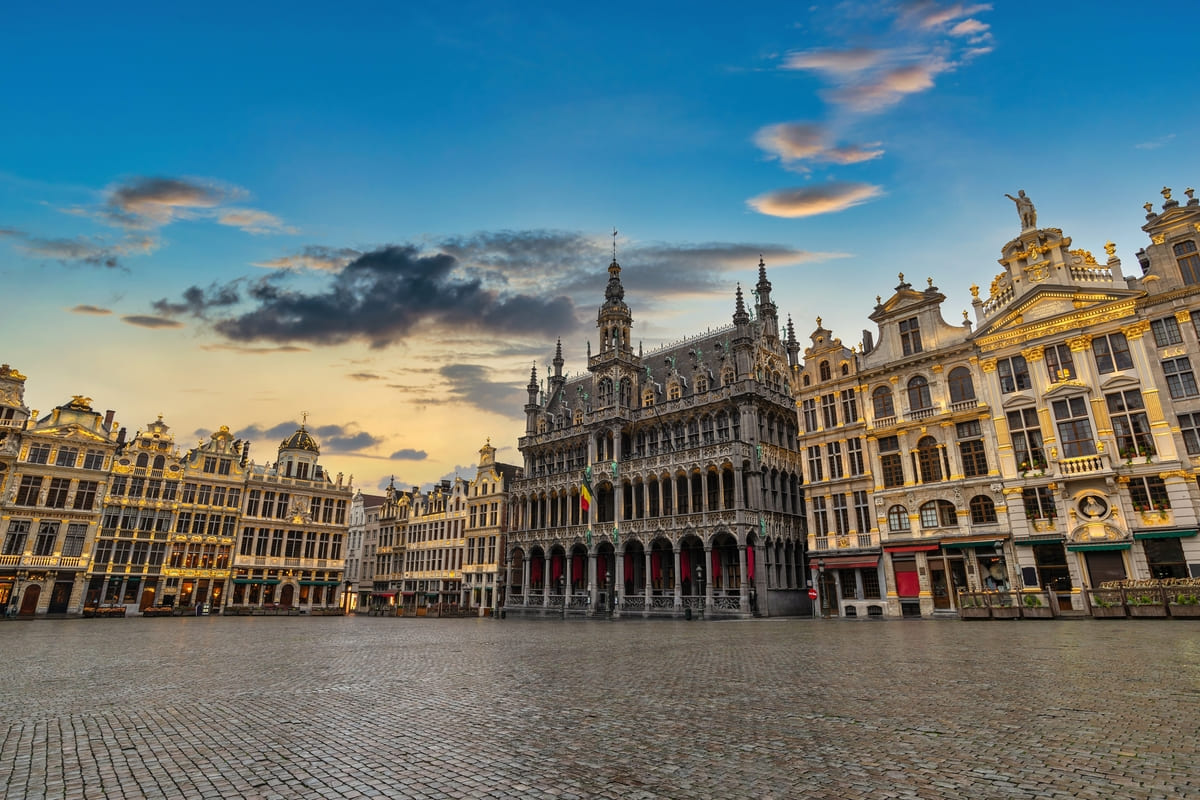
Located in the heart of Brussels, the capital of Belgium, Grand Place is known as a place of particularly high historical and cultural value among European city squares. Since the Middle Ages, this square has served as a stage for commerce, politics, and civic life, and is surrounded by the magnificent City Hall and guild houses, conveying the city's memories to the present day.
The Grand Place is more than just a beautiful sight;A space symbolizing the maturation of urban self-governance and the development of civil society in medieval EuropeIts historical background and architectural value were recognized, and it was registered as a UNESCO World Heritage Site in 1998. In this article, we will explain the intrinsic value of the Grand Place by summarizing its establishment and evolution, the cultural significance of the buildings, and the reasons why it was recognized as a World Heritage Site.
What is the Grand Place?
Grand Place is a city square that spreads out in the center of the old town of Brussels. "Grand Place" means "Grand Square" in French, and is called "Grote Markt" in Dutch. As this name suggests,The Grand Place was a marketplace throughout the Middle AgesIt was.
It is believed that the Grand Place was already established as a place for trade and the distribution of goods in the early Middle Ages, and its importance gradually increased as Brussels developed as a commercial city. Eventually, political and religious ceremonies also began to be held there, and the Grand Place became established as a symbolic space that united the city's economy, politics, and society.
Historical changes from the Middle Ages to the early modern period
The history of the Grand Place is closely linked to the history of the city of Brussels itself. In the Middle Ages, Brussels developed as a trading hub connecting Flanders with the interior. With this economic prosperity as a backdrop, guilds of merchants and craftsmen established their bases around the square,A group of buildings called guild houses was formed..
In the 15th century, the City Hall was built as the center of city administration, and the Grand Place strengthened its role as a symbolic place of urban self-governance. However, in 1695, during the War of the Augsburg League, the square was bombarded by French troops and most of it was destroyed. After this devastating damage, rapid reconstruction was carried out under the initiative of citizens and guilds, and the unified urban landscape that we see today was formed.
During this reconstruction process, each guild competed to rebuild the building, and as a result,A unique landscape where early modern architecture overlaps with medieval urban structureswas created.
Cultural and artistic value of the buildings
One of the iconic buildings of the Grand Place is the Town Hall. With its soaring spire, this building is considered a masterpiece of Brabant Gothic style and visually represents the city's autonomy and authority. Its asymmetrical structure is a testament to the history of medieval architecture, which was completed through gradual expansion.
On the other hand, the guild houses surrounding the square were rebuilt between the end of the 17th century and the beginning of the 18th century after being destroyed in 1695.The building incorporates a variety of architectural styles, including the Baroque style, Louis XIV style, and early Neoclassical style.The decorations and sculptures on the facades symbolized the patron saints of each guild and the pride of their professions, and served to visualize the values of civil society.
The landscape formed by these buildings together is not just an aesthetic collection,Historical evidence of the power and cultural maturity of urban citizensIt can be said that.
Why was the Grand Place registered as a World Heritage Site?
The Grand Place was inscribed on the World Heritage List in recognition of its outstanding universal value, based on criteria (ii) and (iv). Criterion (ii) states:It is an important reference for understanding the development of architecture and urban space in Europe.Based on the structure of a medieval market square, the unified landscape that was created through reconstruction is a noteworthy presence in the history of urban squares.
Also, in criterion (iv),The remarkable urban landscape that demonstrates the maturation of urban autonomy and civil society from the Middle Ages to the early modern periodDespite the historical trials of destruction and reconstruction, the fact that the square's function and symbolism have been preserved to this day is a good example of the continuity of urban culture.
The Grand Place is an iconic World Heritage Site that is essential for understanding the history of European cities.
 English
  日本語
日本語