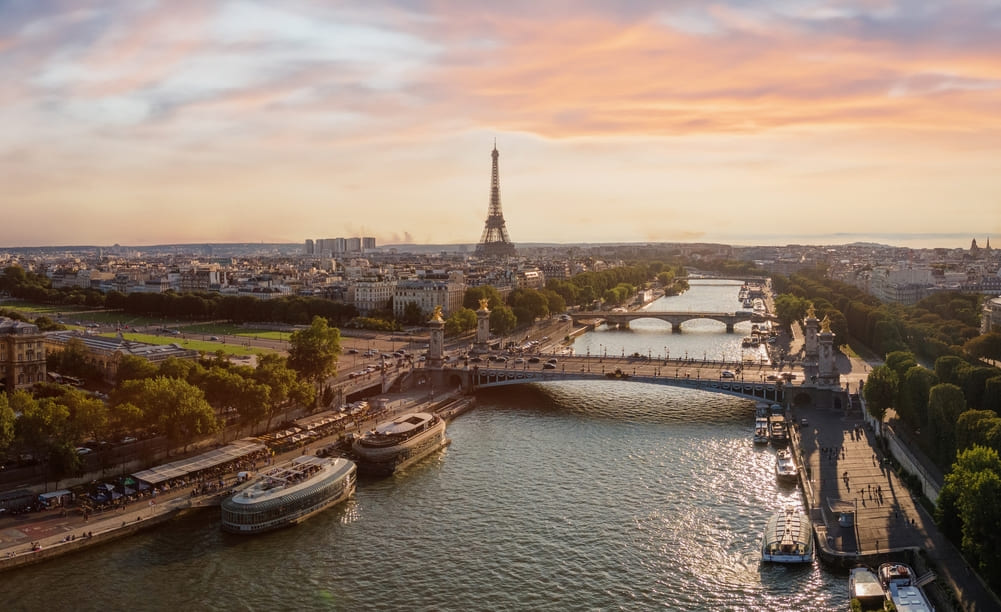
Flowing through ParisSeine RiverThe historic section along the river was registered as a World Heritage Site in 1991 under the name "Paris, Banks of the Seine."
Not only is it a beautiful cityscape,Urban development and the transformation of power and culture from the Middle Ages to the 20th centuryHowever, its value lies in the fact that it can be interpreted as part of the riverside scenery.
This articleUNESCO's evaluationThis section summarizes the key points and highlights of representative examples.

What are the banks of the Seine in Paris?
The banks of the Seine in ParisThe historic section along the Seine in central Paris, from the Pont de Sully to the Pont d'IénaThe UNESCO World Heritage Site refers to the urban landscape formed in the 19th century. The area registered as a World Heritage Site includes the buildings, bridges, and squares that line the riverbanks, centered around the Île de la Cité and the Île Saint-Louis. This area has functioned as a political, religious, and economic center since Roman times.
The Seine was both a transportation route and an axis that determined the city's structure. With the concentration of royal palaces, cathedrals, and administrative facilities along the river,An urban landscape closely linked to waterfront, power, faith, and culturewas formed.
The history of the Seine River banks reflecting French monarchy, religion, and civil society.
In medieval Paris, the monarchy and the church played central roles in the city. The Île de la Cité housed the royal palace and the cathedral, and politics and religion were spatially linked. As the monarchy expanded, the city spread to the right and left banks, and universities and residential areas for citizens were formed.
The French Revolution at the end of the 18th century dramatically changed the significance of the banks of the Seine.As architecture, which had been a symbol of royal power, was transformed into a stage for revolution and republicanism, urban space itself began to carry political messages.In addition to the large-scale urban remodeling in the 19th century,The urban landscape of the riverside was further integrated by the development in the first half of the 20th century.This created the magnificent and unified landscape we see today.
Representative buildings that make up the banks of the Seine
The banks of the Seine are lined with a succession of buildings symbolizing different values from different eras.
Eiffel Tower
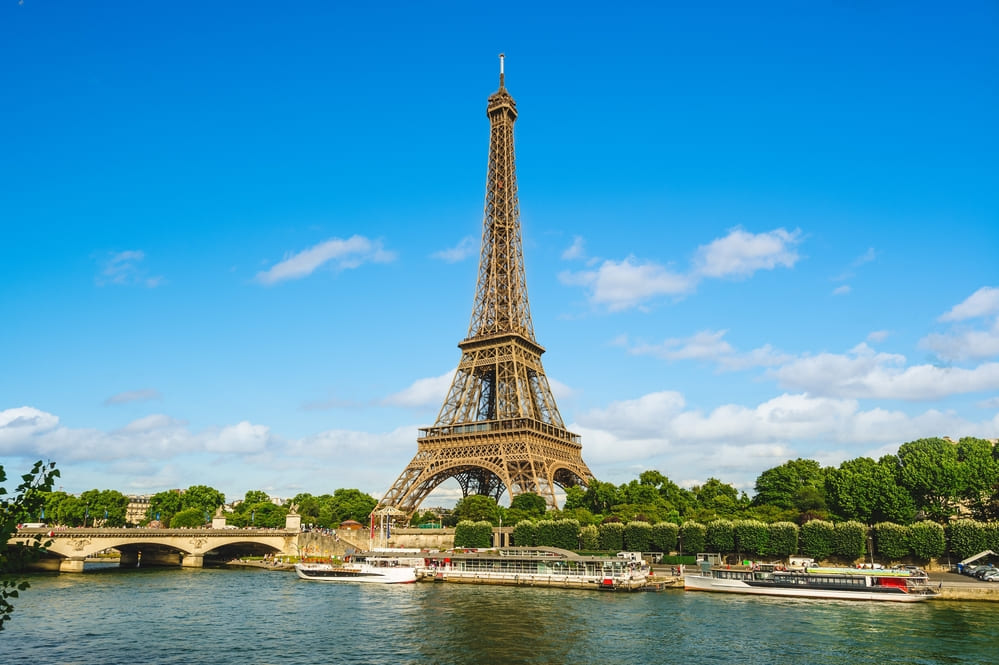
The Eiffel Tower was built for the Paris World's Fair held in 1889. This fair was a national event commemorating the 100th anniversary of the French Revolution, and the Eiffel Tower was conceived as its symbol. The iron structure, over 300 meters high, was an unprecedented scale at the time,The pinnacle of modern engineering technology developed after the Industrial RevolutionIt showed:
When it was first built, the Eiffel Tower was criticized for "damaging the landscape" and "being nothing more than a temporary structure." However, its rational structural beauty, made possible by the use of the new material iron, eventually gained recognition, and since the 20th century it has been positioned as a symbol of Paris. The fact that a monument of modern technology has been incorporated into the historical landscape of the Seine River isAn important element that visually shows the timeline of urban development from the Middle Ages to modern timesis.
Conciergerie
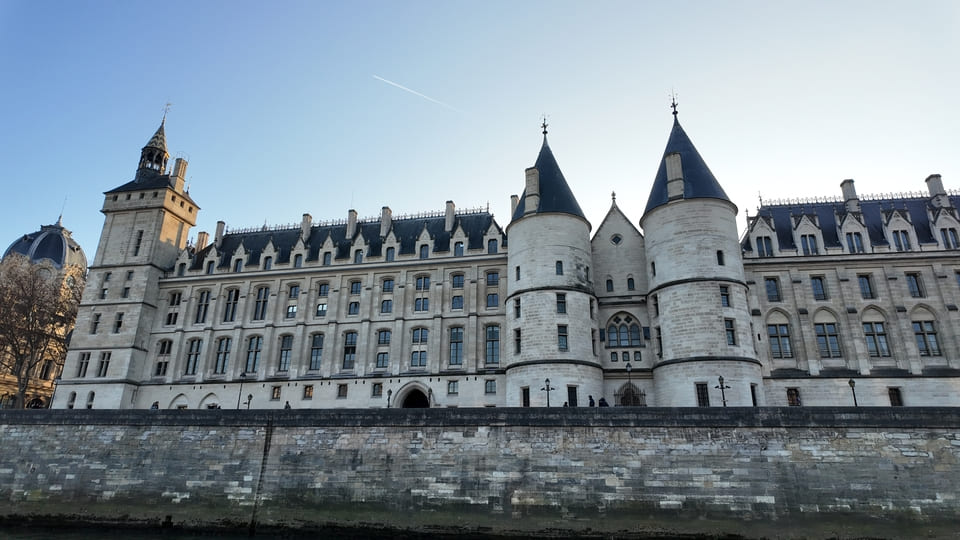
The Conciergerie was established as part of the medieval royal palace (Palais de la Cité) located on the Île de la Cité. From the 13th to the 14th century, it served as the residence and administrative center of the French kings, but after the kings moved to the Louvre Palace, it began to serve as a judicial institution and an affiliated prison at the end of the 14th century.
During the French Revolution, the Conciergerie was the location of the Revolutionary Tribunal, where many defendants were tried. As Marie Antoinette and other famous people were imprisoned there, the Conciergerie is remembered as a symbol of the Reign of Terror.A rare entity that has survived while changing roles under different political systems: monarchy, justice, and revolutionThe Conciergerie on the banks of the Seine is an important example of how changes in power have been directly reflected in the function of the architecture.
Place de la Concorde
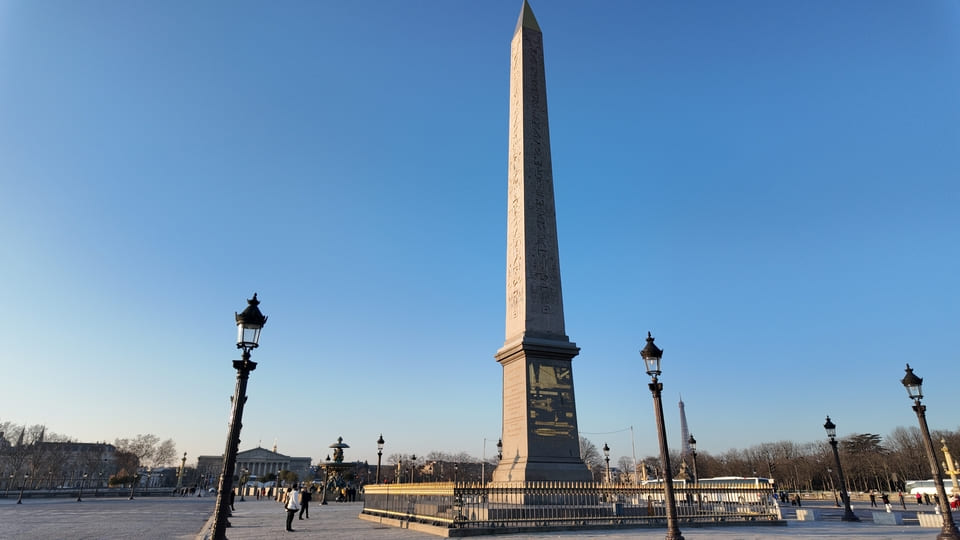
The Place de la Concorde was developed in the mid-18th century as a space to honor the power of royalty. Originally called Place Louis XV, it was an urban feature symbolizing the majesty of the French monarchy. However, after the French Revolution in 1789, the place was renamed Place de la Révolution and its political significance changed dramatically.
In 1793, the executions of Louis XVI and Marie Antoinette took place in this square. This public execution by guillotine was an event that symbolized the establishment of civil society and the collapse of the old regime. After the Restoration of the Monarchy and the establishment of the Republic, the square was given the name "Concorde" (Reconciliation).An attempt to sublimate memories of conflict and bloodshed within urban spaceThis square, located next to the banks of the Seine, is a prime example of how political history is imprinted on the urban landscape.
Louvre Museum
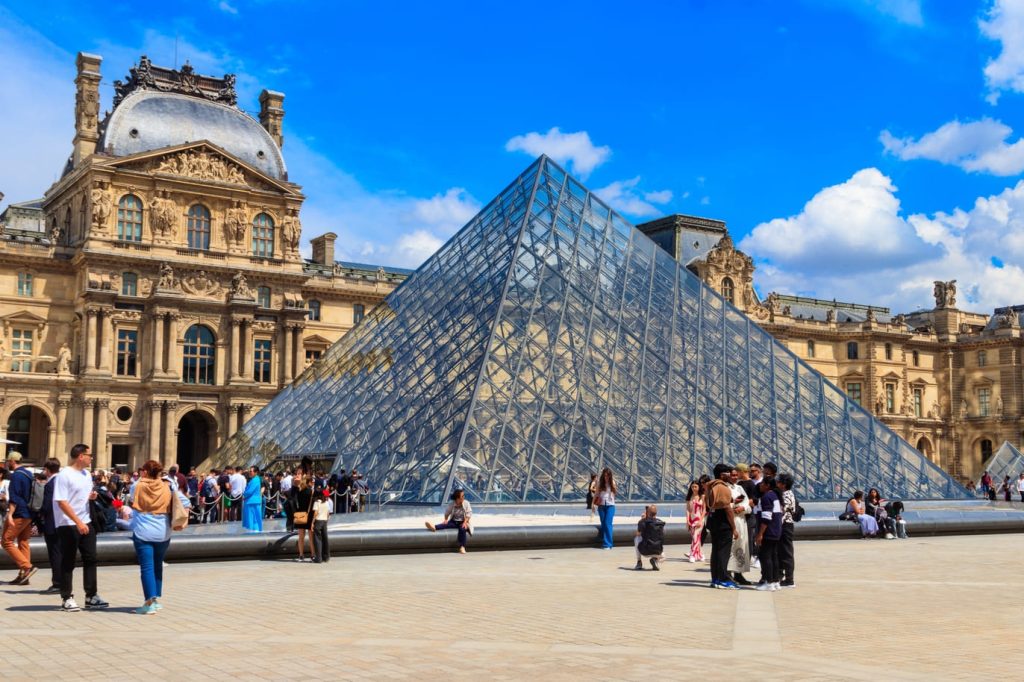
The Louvre Museum was originally built as a fortress in the 12th century and eventually developed into a royal palace. This building, which served as the center of French monarchy from the Middle Ages to the early modern period, underwent a historical turning point with the French Revolution before opening as a public museum in 1793.
This transformation meant that the palace, which was once the king's private space, was transformed into a cultural facility open to the public. The art works housed there range from ancient civilizations to modern times,A place to systematically present the history of human artLocated on the banks of the Seine, the Louvre symbolizes the establishment of cultural heritage and the idea of public service in the urban landscape.
Notre Dame Cathedral
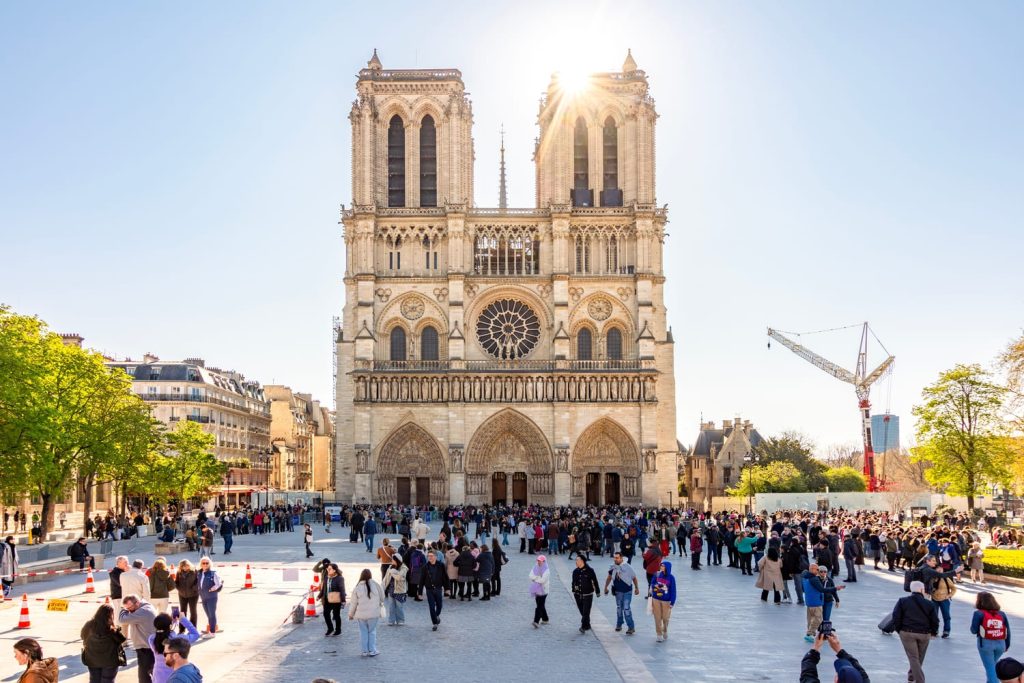
Notre Dame Cathedral is a masterpiece of Gothic architecture, built between the 12th and 14th centuries. Located on the Île de la Cité, the birthplace of Paris, it has been a religious center as well as closely linked to civic life. It has been the site of coronations and national ceremonies,A religious facility and a political symbolWe have also achieved this.
The pointed arches and stained glass windows that are characteristic of Gothic architecture are the crystallization of faith in God and human technological prowess. Although it fell into temporary ruin during the French Revolution, it was reevaluated after restoration in the 19th century and has been positioned as a spiritual pillar of Paris. Notre Dame Cathedral on the banks of the SeineA symbol of religious culture that continues from the Middle Ages to the present dayIt supports the city's identity as a city that has traditionally been dominated by stone architecture, and offers a new sense of value in the form of steel structures.
Sightseeing tips for Paris
Crossing the bridge and traveling back and forth between the left and right banks makes it easy to enjoy the changing scenery, and there are also many cruise tours that travel back and forth through the area registered as a World Heritage Site.
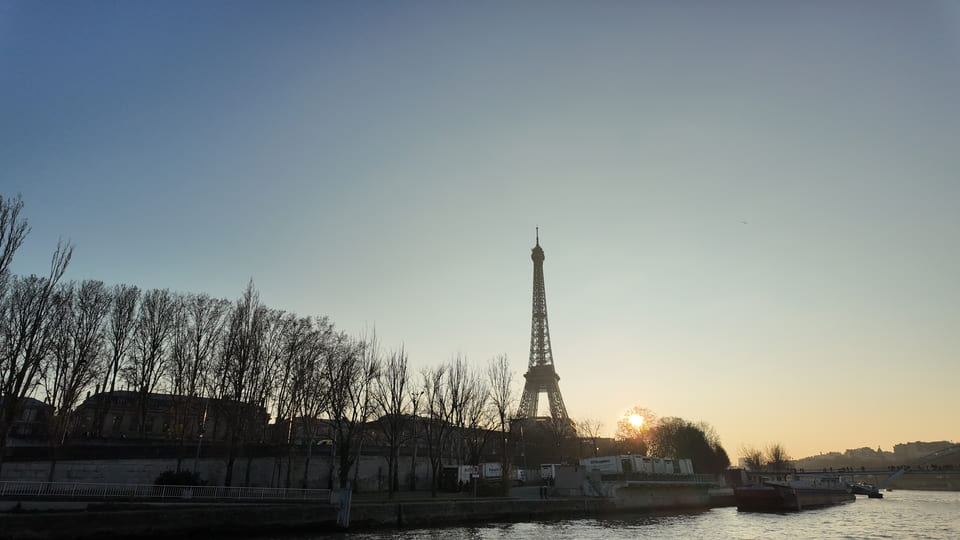
Because nighttime lighting significantly alters the impression of the landscape,Walk in two separate sessions, one during the day and one at night.It is worth it.
Other World Heritage Sites in France include,Palace of Versailles,Mont Saint-MichelYou can also get there by bus tour or train, so you might want to consider those options as well.
summary
The banks of the Seine in Paris are not a collection of individual landmarks,The accumulation of time as rivers and cities grew together as one.Understanding it in this way reveals its significance as a World Heritage Site. When visiting, please pay attention to crowds, safety, and opening hours, and plan your visit accordingly. Beyond short introductions in snippets and guidebooks,Layers of history in the order in which one has walked.Trying out different reading methods should give you a more nuanced understanding of the riverside's value.
The main focus of the scenery changes depending on whether you walk along the right or left bank of the river.Change shores on the return trip.Even just walking along the banks of the Seine can lead to new discoveries. Since road closures can occur due to unexpected events such as street performances and demonstrations, it's a good idea to check alternative routes on a map app. If you plan to combine this with museum visits, be sure to check each museum's calendar beforehand to avoid overlapping closing days. While strolling along the banks of the Seine is free, separate entrance fees apply to each facility.Budget and priorities for the dayDeciding on this beforehand will reduce indecision.
 English
  日本語
日本語
[...] The completed parts were shipped to America, assembled on Liberty Island in New York, and unveiled on October 28, 1886. The cultural ties between France and America are also mentioned in the article about the banks of the Seine in Paris. [...]
[...] For other World Heritage sites in France, please also see our articles on the Palace of Versailles and the banks of the Seine in Paris. [...]
[...] For other World Heritage Sites in France, please also see our articles on the banks of the Seine in Paris and Mont Saint-Michel. We also feature explanations of other World Heritage Sites, such as the Statue of Liberty and Grand Canyon National Park, on this site. [...]