
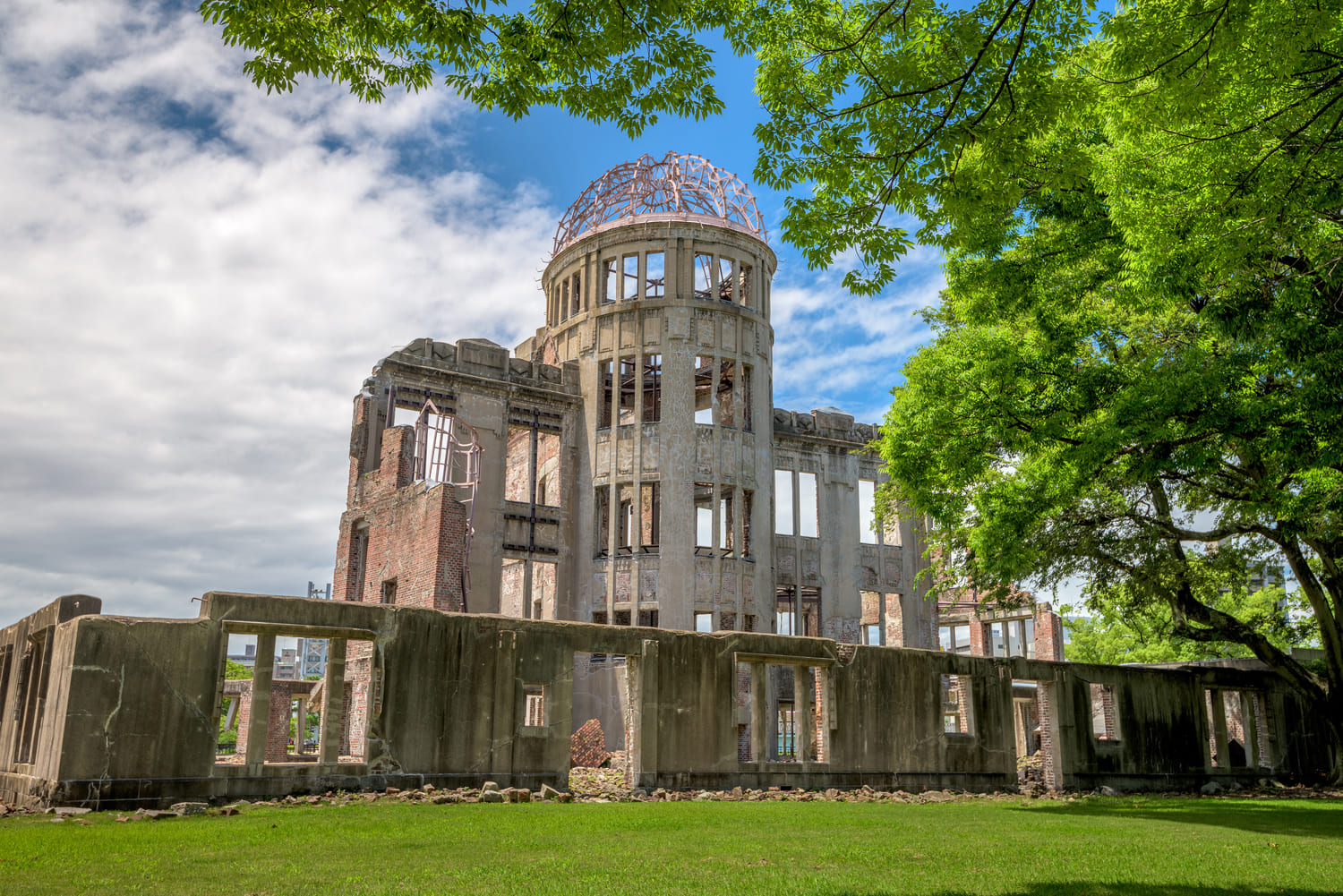
This year, 2025, marks the 80th anniversary of the end of the war in 1945. One of the World Heritage Sites that plays a major role in conveying to future generations the pain of war and the preciousness of peace is the Atomic Bomb Dome in Hiroshima. Miraculously remaining just 160 meters from the hypocenter, it serves as a "silent witness" that simultaneously reflects the threat of nuclear weapons and the resilience of humanity.
In this article, we will carefully unravel the background of the creation of the Atomic Bomb Dome, the process leading up to its registration as a World Heritage Site, the secret behind how its structure survived collapse, and why it is called a "negative World Heritage Site."
- 1. What is the Atomic Bomb Dome? Location and basic information
- 2. The History of the Atomic Bomb Dome: From Prewar to World Heritage Site Registration
- 3. Why did it survive? The secrets of its structure and preservation work
- 4. Reasons for World Heritage Registration and the Meaning of "Negative World Heritage"
- summary
1. What is the Atomic Bomb Dome? Location and basic information
The Atomic Bomb Dome, located in Otemachi 1-chome, Naka-ku, Hiroshima City, Hiroshima Prefecture, was built in 1915 (Taisho 4).Established as Hiroshima Prefectural Products Exhibition HallThe building was designed by Czech architect Jan Letzel, and its neo-baroque exterior and oval copper dome were particularly eye-catching, which was rare in Hiroshima at the time.
The building is a three-story brick structure, with the central staircase being five stories tall, giving it unique proportions. Its reflection on the surface of the Seto Inland Sea has made it a popular postcard attraction of Hiroshima.
It is now incorporated into a corner of Hiroshima Peace Memorial Park and its official name is the "Hiroshima Peace Memorial," but it is still commonly referred to as the "Atomic Bomb Dome" among local residents and tourists.
2. The History of the Atomic Bomb Dome: From Prewar to World Heritage Site Registration
When it first opened, textiles, alcoholic beverages, and crafts made in Hiroshima Prefecture were displayed and sold inside the building, and it was also used as a venue for art exhibitions and expositions. In 1921, it was renamed the Hiroshima Prefectural Merchandise Display Center, and in 1933 it became the Hiroshima Prefectural Industrial Promotion Hall, and continued to serve as a hub for civic culture until 1944, when wartime sentiment began to take hold.
At 8:15 a.m. on August 6, 1945, during World War II, an atomic bomb dropped by a US B-29 bomber exploded approximately 600 meters in the sky. The Industrial Promotion Hall, located only 160 meters from the hypocenter, was instantly burned to the ground. However, the walls were not crushed by the shock wave from directly above, and the building survived, with its bare framework still intact.
Shortly after the war, the nickname "Atomic Bomb Dome" became established, and there was debate among local residents about whether to preserve or demolish it, but in 1966 the Hiroshima City Council resolved to preserve it permanently. Five preservation works were subsequently carried out by 2021, and the building was registered as a UNESCO World Heritage Site in December 1996.
3. Why did it survive? The secrets of its structure and preservation work
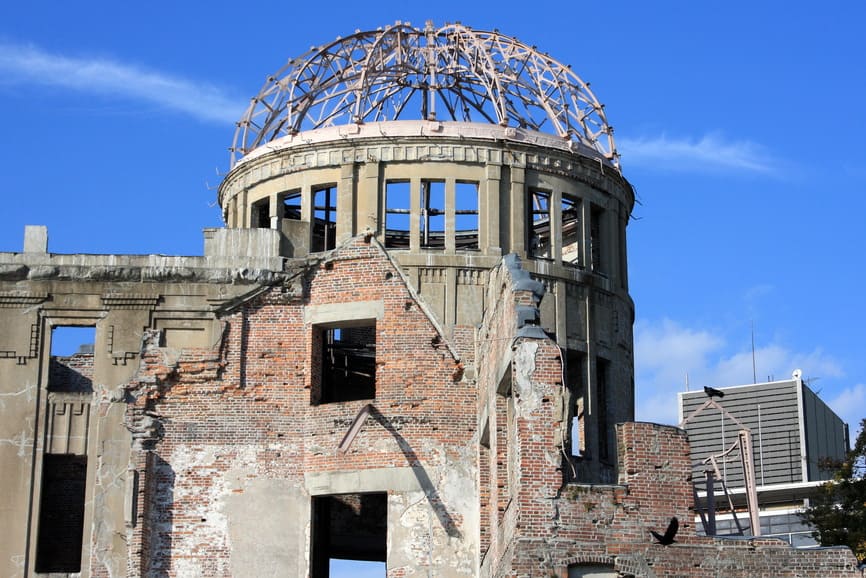
The reason why the Atomic Bomb Dome was spared from collapse wasFirst, the coincidence of the explosion location and the building structureBecause the blast struck the building at a nearly perpendicular angle from directly above, no lateral shear force was applied to the exterior walls, and the brick walls and steel frame, which are strong against vertical loads, were able to withstand the force.
It is also said that the large number of window frames prevented the internal pressure from rising suddenly, and the copper roof plates melted when exposed to the heat rays, creating a "chimney effect" that allowed the shock waves to escape. In the preservation work, the top priority was given to maintaining the building's appearance at the time of destruction, and inconspicuous reinforcement techniques were used, such as injecting resin into cracks and adding steel braces inside the exterior walls.
In particular, the construction work carried out in 1989 thoroughly adhered to the concept of "maintaining the status quo," replacing deteriorated mortar joints with modern materials and applying waterproofing agents to the walls to prevent rainwater from seeping in.
4. Reasons for World Heritage Registration and the Meaning of "Negative World Heritage"
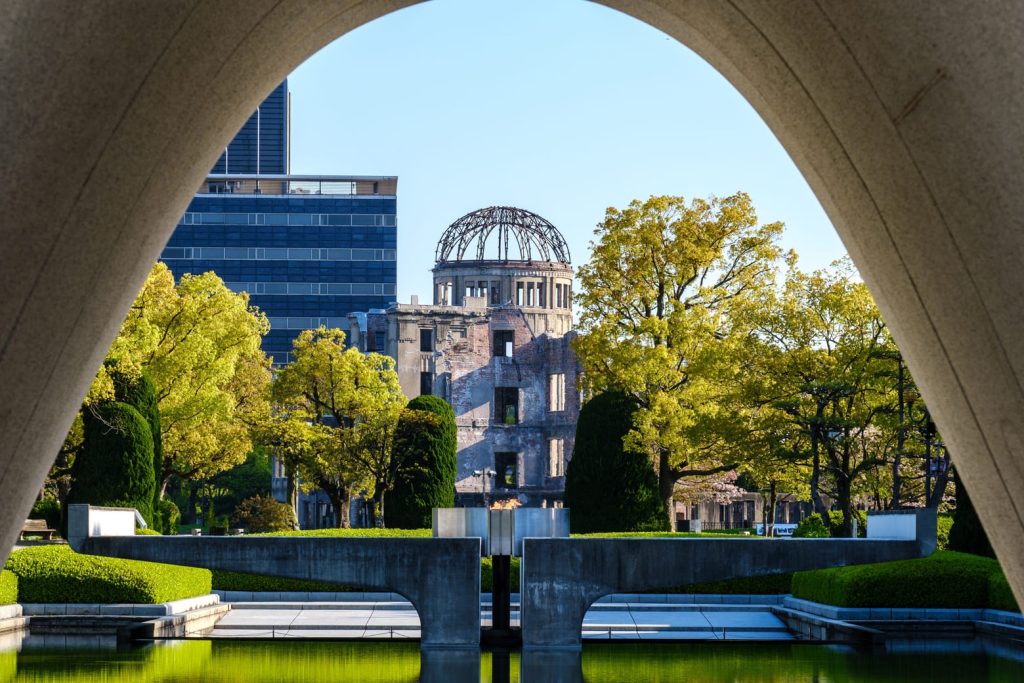
The World Heritage Committee described the Atomic Bomb Dome as "a powerful symbol that has continued to call for world peace for more than half a century after the use of destructive force unprecedented in human history," and determined that it meets the criteria for cultural heritage registration (vi) "directly related to an event or idea."
reference:"Hiroshima Peace Memorial (Genbaku Dome)(UNESCO)
Among the remains of war damage, architecture that survived directly under the hypocenter is rare in the world, and the traces of destruction themselves have historical value. At the same time, the Dome is called a "negative World Heritage Site," in contrast to conventional heritage sites that celebrate a glorious past.A mission to remember humanity's mistakesBy leaving the ruins of the site unrepaired and open to the public, the site allows visitors to experience the inhumanity of nuclear weapons and fulfills an educational role in calling for peace and the abolition of nuclear weapons.
summary
What did you think?
Even now, so many years after the end of the war, heritage sites that can still tell the true story of history are extremely valuable, and it is precisely because they are negative histories that we feel strongly that there is significance in preserving them as World Heritage Sites.
 English
  日本語
日本語
Hello, I'm Ito, the author of this article.
I have actually visited the Atomic Bomb Dome, and many of its visitors were students and people from outside Japan. I was left with the strong impression that the place plays a major role in conveying history across generations and borders.